
Root canals are performed endodontically more than 15 million times each year in the United States, with over 41,000 procedures completed daily. When facing a damaged or infected tooth, many of us find ourselves at a crossroads: should we save the natural tooth with a root canal or replace it with an implant? This decision can feel overwhelming, especially when you’re dealing with dental pain.
However, what you might not know is that endodontically treated teeth can function effectively for many years when the procedure is performed properly. In fact, root canal therapy enables us to treat and save teeth that would otherwise require extraction, thus promoting a healthier and more natural smile. When caught in time, this treatment can not only preserve your natural tooth but also relieve pain and prevent more serious complications.
Throughout this article, we’ll explore the key differences between root canals and implants, examine why saving your natural tooth is often preferable, and explain the factors your dentist considers when recommending treatment. Understanding these options is essential because untreated dental infections can lead to severe consequences, including the spread of infection and eventual tooth loss.
Root canal vs implant: what’s the real difference?
When facing a severely damaged tooth, understanding the fundamental differences between root canal therapy and dental implants is crucial for making an informed decision.
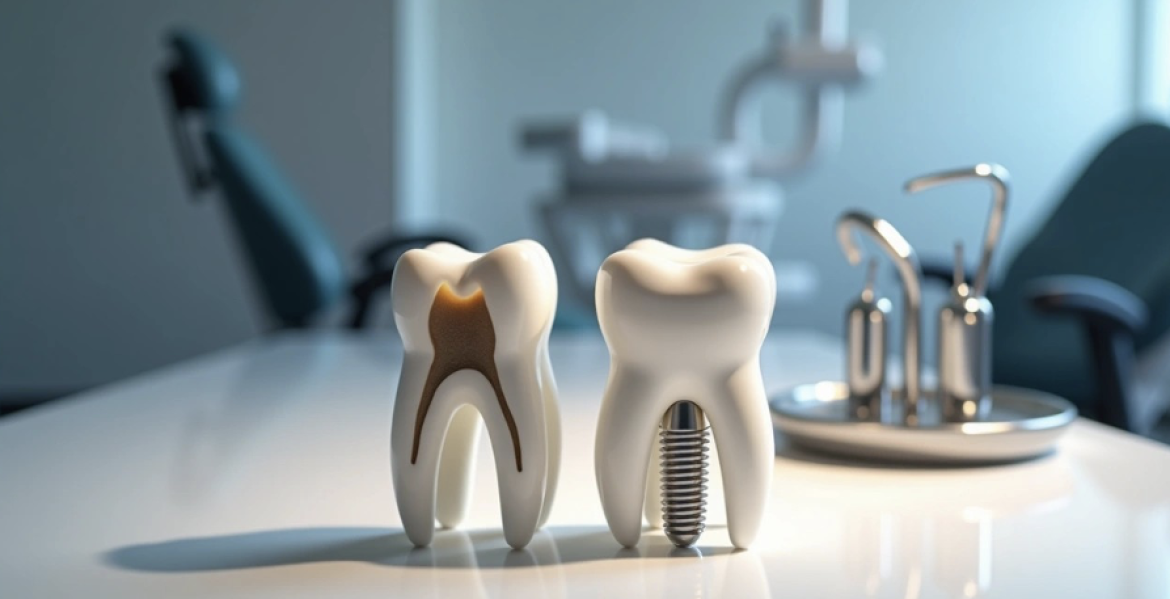
A root canal procedure focuses on saving your natural tooth. During this treatment, a dentist or endodontist removes infected pulp from inside your tooth, cleans the area thoroughly, and seals it to prevent further infection. The tooth is then typically restored with a crown, allowing you to maintain your natural tooth structure while eliminating the source of pain.
In contrast, a dental implant involves extracting the damaged tooth completely. Subsequently, a titanium post is surgically placed into your jawbone to serve as an artificial root. After a healing period, a crown is attached to this post, creating a functional replacement that resembles your natural tooth.
The primary advantage of endodontically treated teeth is the preservation of your natural tooth structure. This preservation maintains normal sensation and chewing efficiency while protecting surrounding teeth from excessive strain. Additionally, root canal therapy usually requires fewer dental visits and is generally less invasive than implant surgery.
Dental implants, meanwhile, offer a solution when a tooth cannot be saved through endodontic treatment. Although implants provide excellent durability and function, they require more extensive treatment time and typically come with higher initial costs.
Why saving your natural tooth is often the better choice
Natural teeth are biological marvels that play an essential role in your overall health beyond just chewing. Preserving your natural tooth through endodontic treatment offers numerous advantages over extraction and implant placement.
Primarily, keeping your natural tooth maintains the integrity of your jawbone. Once a tooth is extracted, the jawbone begins to deteriorate through a process called resorption. This doesn’t just affect the immediate area—it can compromise neighboring teeth, alter your bite alignment, and even change your facial appearance over time.
Even more important, endodontically treated teeth help preserve the complex network of bones, tissues, and nerves that make up your dental structure. Natural teeth stimulate bone health, preventing deterioration that can lead to further complications.
Notably, maintaining your original tooth structure allows for better speech, chewing, and swallowing compared to artificial alternatives. Your natural teeth also absorb beneficial buffers in food and saliva, such as calcium and fluoride ions, which helps prevent cavities.
Furthermore, saving your tooth is often more cost-effective long-term than extraction followed by implant placement.
Don’t let infection or pain derail your full-mouth restoration. Call (713) 795-4666 or book online at HealthyGums4All.com to see if a root canal can save your tooth and protect your future smile. Serving Houston, Sugar Land, Katy, and nearby communities.
What your dentist considers before recommending treatment
The decision between preserving a tooth endodontically or extracting it for an implant is never taken lightly. Your dentist evaluates multiple factors prior to recommending the most appropriate treatment path.
Tooth structure assessment is crucial—the amount of remaining healthy tooth substance directly affects its ability to withstand restoration. Essentially, teeth with adequate structure above the gum line are better candidates for root canal therapy.
Your medical history plays a significant role too. Conditions like uncontrolled diabetes can reduce success rates for both treatments. Additionally, your dentist examines your periodontal health, as severe bone loss might favor implant placement.
Throughout this evaluation, your dentist considers:
- The strategic importance of the tooth for esthetics and function
- Quality and quantity of jawbone tissue
- Restorative prognosis and success likelihood
- Your oral hygiene practices and dental history
Interestingly, research shows that endodontically treated teeth have survival rates comparable to implants—93.75% versus 91.72% over two years. Moreover, most root canal-treated teeth are lost due to non-endodontic reasons like recurrent cavities (26.6%) or fractures (21.5%), not endodontic failure (2.4%).
Don’t let infection or pain derail your full-mouth restoration. Call (713) 795-4666 or book online at www.HealthyGums4All.com to see if a root canal can save your tooth and protect your future smile. Serving Houston, Sugar Land, Katy, and nearby communities.
Conclusion
When faced with a damaged tooth, the choice between a root canal and an implant represents a significant decision for your long-term oral health. Throughout this article, we’ve seen how endodontic treatment offers a valuable path to preserving your natural teeth while effectively addressing infection and pain. Root canals not only maintain your natural tooth structure but also protect surrounding teeth and preserve jawbone integrity.
Despite common misconceptions, properly treated endodontic teeth function effectively for many years, often matching the success rates of dental implants. Your natural teeth provide irreplaceable benefits—they stimulate bone health, enable normal sensation during chewing, and absorb beneficial minerals from food.
Your dentist carefully evaluates multiple factors before recommending treatment, including remaining tooth structure, medical history, and periodontal health. This thorough assessment ensures you receive the most appropriate care for your specific situation. Most importantly, saving your natural tooth typically requires less invasive procedures and comes with lower costs compared to extraction and implant placement. Remember, untreated dental infections can lead to serious complications beyond tooth loss. Therefore, prompt action remains essential when dealing with dental pain or infection. We encourage you to consult with your dental professional to determine whether a root canal might save your tooth and maintain your smile’s natural beauty and function for years to come.